
Choosing Process Machinery for Your Pharma Plant
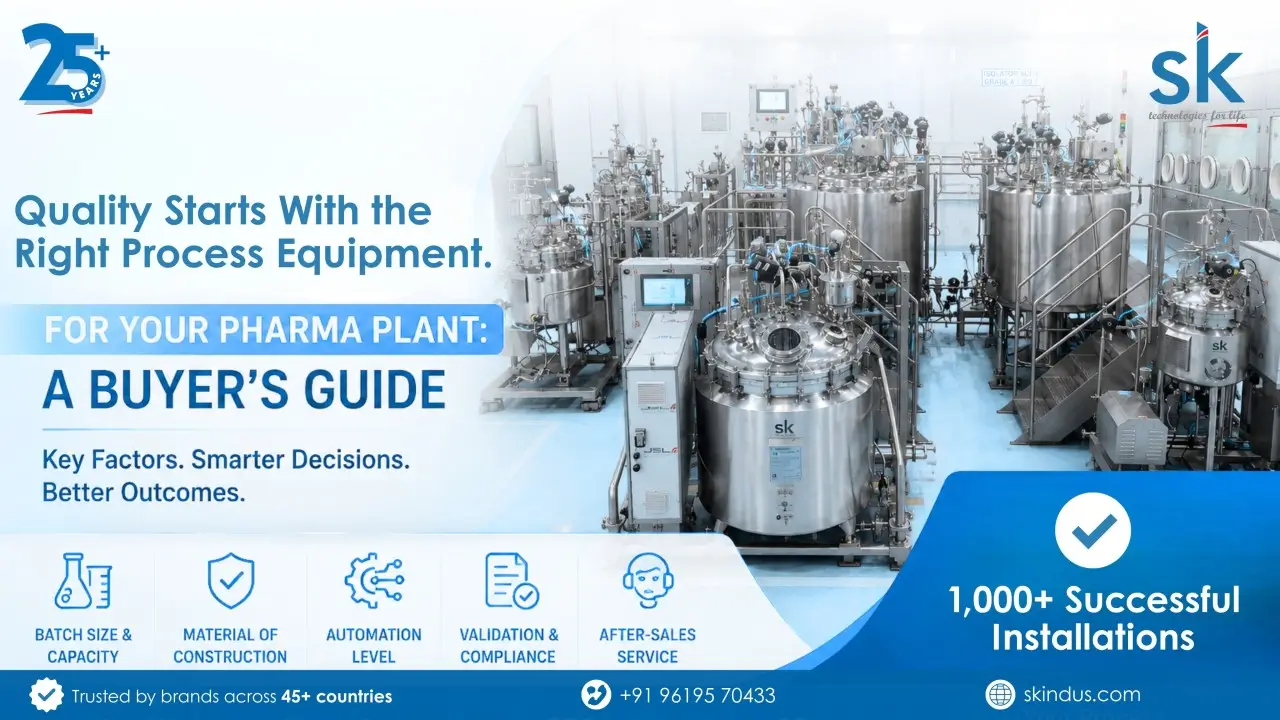
Choosing process machinery for a pharmaceutical plant is not just a purchase. It is a long-term decision that affects product quality, compliance, efficiency and overall plant performance.
- Consistent batches
- Faster production
- Easier cleaning
- Reliable operations
- Downtime
- Validation issues
- Higher lifecycle costs
Here are the key factors to consider before selecting process machinery.
What to Evaluate Before You Buy
Define Your Process Requirements
Start with your product needs:
- Product type (syrup, cream, ointment, etc.)
- Batch size and volume
- Mixing and homogenization needs
- Heating, cooling and vacuum requirements
- Viscosity and processing time
- Cleaning and sterility requirements
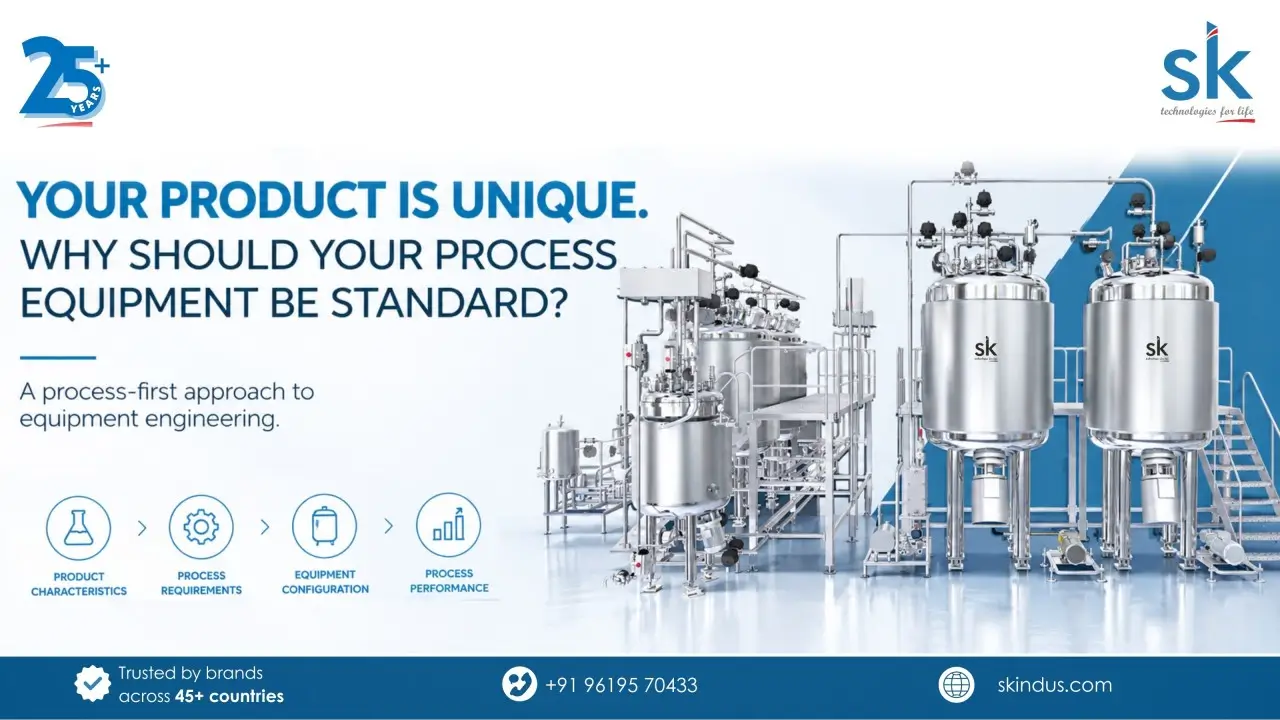
Equipment should be designed around your process, not the other way around.
Batch Size and Future Growth
Select equipment based on:
- Working and total volume
- Minimum and maximum batch size
- Production frequency
- Future capacity plans
Avoid undersized or oversized equipment. Always plan for scalability.
Material of Construction
For pharma, SS 316/316L is standard for product-contact parts. Also check:
- Surface finish quality
- Hygienic, crevice-free design
- Drainability
- Weld quality
- Cleaning compatibility
Level of Automation
Modern pharma plants need controlled, repeatable processes. Look for:
- PLC and HMI systems
- SCADA integration
- Recipe-based operation
- Process monitoring and data logging
- Automated CIP/SIP
Automation improves consistency and reduces human error.
Validation and Compliance
Ensure the vendor supports:
- DQ, IQ, OQ
- FAT and SAT
- Complete documentation
- Material and welding certificates
- Calibration records
Compliance support is critical in pharma manufacturing.
Engineering Capability of the Vendor
A good supplier understands the full process, not just the equipment. Check for:
- Process and utility design
- P&ID support
- Equipment sizing
- Automation integration
- Installation and commissioning
CIP and SIP Design
Efficient cleaning reduces downtime and contamination risk. Evaluate:
- CIP/SIP compatibility
- Spray system design
- Drainability
- Internal surface finish
- Cleaning cycle automation
Vendor Experience
Review:
- Industry experience
- Installed base
- Project execution capability
- Customer references
- Regulatory understanding
Experience ensures smoother project delivery.
Total Cost of Ownership
Don’t focus only on purchase price. Consider:
- Energy and utility usage
- Maintenance cost
- Downtime
- Cleaning time
- Lifecycle support
A better machine may cost more initially but saves more in the long term.
SK – Technologies for Life
SK is a process engineering company specialising in pharmaceutical machinery and systems, focused on delivering complete process solutions, not just equipment.
Years of experience
Installations
Countries
Core Strengths
- Process engineering-driven design
- Custom-built pharmaceutical systems
- Automation and control integration
- CIP/SIP-ready equipment
- Global project experience
Applications
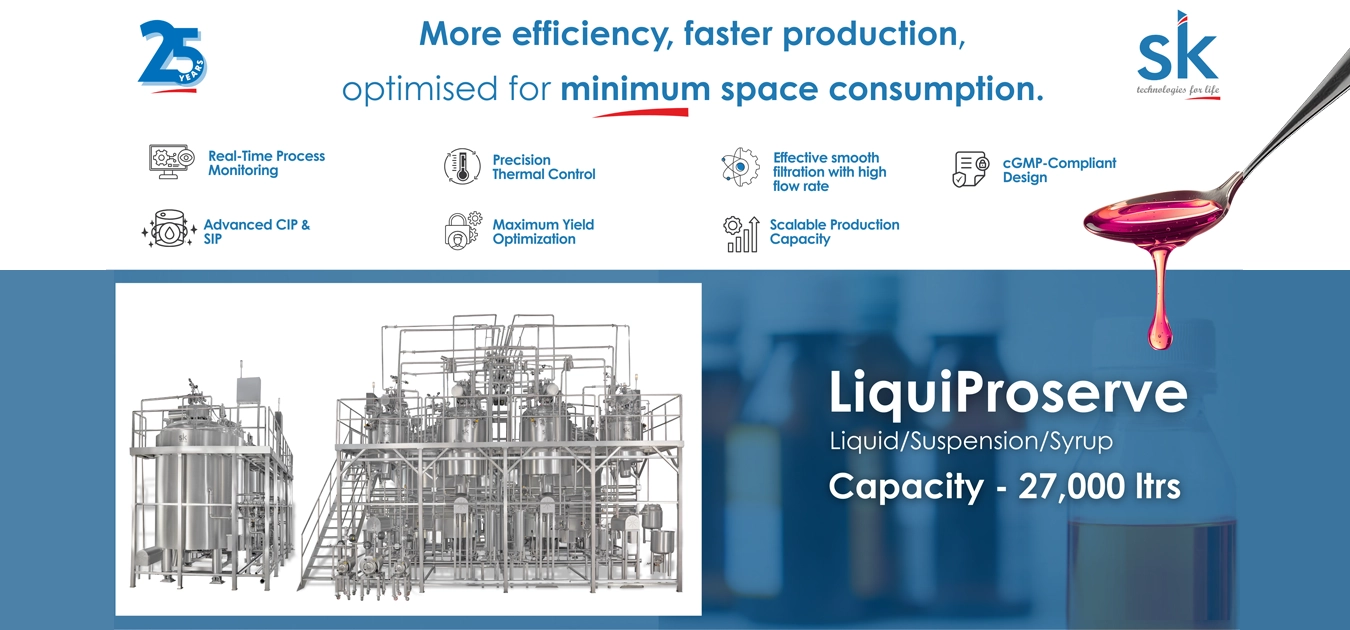
- Syrups and suspensions
- Creams and ointments
- Lotions and gels
- Oral liquids
- Sterile and pilot-scale systems
Engineering Focus
- cGMP-compliant design
- SS 316/316L construction
- PLC, HMI, SCADA systems
- Data integrity and validation support
Ask These Questions Before Buying
- Does it match my process and batch size?
- Is it hygienically designed and easy to clean?
- What level of automation is included?
- Does it support validation and documentation?
- Can it scale with future growth?
- What is the total lifecycle cost?
Selecting the right process machinery is critical for pharmaceutical success. The best equipment improves quality, efficiency and compliance, but the real value comes from choosing the right engineering partner.
SK – Technologies for Life delivers complete, scalable and compliant process solutions that help pharmaceutical manufacturers build reliable, future-ready plants.